India’s dairy exports — despite rising from roughly US $170 million in 2009-10 to over US $720 million in 2024-25 — face recurrent export rejections and compliance setbacks linked less to product safety and more to labelling and documentation failures, according to researchers highlighting a regulatory blind spot in the dairy trade.
Data from United Nations Industrial Development Organization (UNIDO) export rejection records show that between 2010 and 2024, India had about 344 rejected consignments in key markets such as the United States and Australia under the dairy product category (HS04). Around 57 % of these rejections were due to labelling-related non-compliance — such as missing allergen declarations, incorrect descriptions, misleading claims, improper nutrition panels and failure to meet destination-specific formatting rules — rather than intrinsic product quality issues.
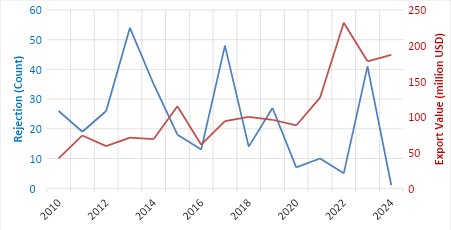
This pattern exposes a regulatory and compliance gap: while Indian dairy exporters increasingly expand into global markets, compliance with destination market labelling standards remains inconsistent, reducing market access and increasing costs and wasted shipments. Improving labelling practices and documentation is seen as a “low-hanging policy opportunity” that could deliver outsized gains for Indian dairy trade by reducing export rejections and enhancing global competitiveness.
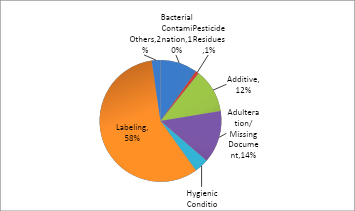
Experts argue that addressing this blind spot requires coordinated efforts across regulatory bodies, enhanced exporter training in diverse market standards, and a stronger focus by policymakers on harmonising Indian labelling rules with stringent international norms — steps that could help unlock latent export potential in regions such as the EU, North America and East Asia.
Source : Dairynews7x7 Feb 23rd 2026 Read full story here
#IndianDairyExports #ExportCompliance #LabellingStandards #TradeRegulation #DairyTrade #GlobalMarkets