CSE report focuses on ethnoveterinary for AMR (Antimicrobial Resistance)
Delhi-based think-tank, Centre for Science and Environment (CSE), will release a special report to mark World Antimicrobial Awareness Week (WAAW) on November 21, 2022, according to a statement. The publication, prepared by Down To Earth Magazine, is titled Ethnoveterinary medicine: An alternative to antibiotics for the dairy sector. It will be released during a webinar in the afternoon…
Addressing north India’s burning issue sustainably
The monsoon has receded, and North India is bracing for a smoggy winter. And with that the feverish focus on crop stubble burning has returned to India’s public discourse. Like each year, discussions have begun on how bad this year’s stubble burning season will likely be and what potential ad hoc techno-fixes could solve the…
Do not ignore the role of the woman livestock farmer
The livestock sector is one of the most rapidly growing components of the rural economy of India, accounting for 5% of national income and 28% of agricultural GDP in 2018-19. In the last six years, the livestock sector grew at 7.9% (at constant prices) while crop farming grew by 2%. Our field studies show that…
Fate of over thirty crore cattle hangs by a thread under fodder crisis
India has a fodder problem and the fate of over thirty crore cattle hangs by a thread, as fodder prices sharply increase and rumours of worsening shortages spread like wildfire in the farms. The government held emergency meetings in which it declared there are “no shortages”, but it is an open secret that India has a…
Why India’s agri production stats need a ground reality check

How much milk does India really produce? What is its actual domestic requirement of cereals or sugar? These are simple questions, but basic to understanding the market for agri-produce — not just in these inflationary times, but also from a policy and planning perspective. Consider milk. According to the National Statistical Office’s (NSO) household consumer…
No fodder supply crisis;steps taken to address shortages in future: Govt
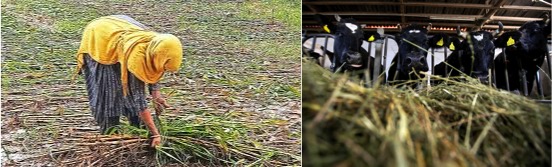
The government on Thursday said there is no fodder supply crisis at present but the prices remain high and steps are being taken to address any possible shortages in the future. According to a senior official, the current high prices of fodder is in line with other agri-products and states have not reported any shortages…
Govt saw fodder crisis coming over two years ago

AWARE OF the upcoming disaster, the Union authorities had developed a blueprint a minimum of two years in the past for assembly fodder deficit that’s adversely affecting agricultural households now. This concerned organising about 100 Farmer Producer Organisations (FPOs) for fodder by the Nationwide Dairy Growth Board (NDDB), however not a single such FPO has…
Lumpy Skin Disease:A livelihood crisis for India’s small dairy farmers

It was on a July day that Lakshmi Devi noticed swelling on her cow Laalri’s legs. The next day, the animal’s body was covered with lumps. Devi called the local veterinarian to find out that a viral illness by the name of lumpy skin disease (LSD) has been spreading in her district of Bikaner in…
Grassland, fodder issues merit global attention

India will occupy the G20 Presidency from December 1, 2022, to November 30, 2023, and host the 18th G20 Summit next year. The G20 Chair undertakes a wide range of activities to help members discuss and coordinate policies on matters of common interest. The shift in focus in recent years to the Global South is…
NDP-II set for rollout from April

The ambitious plan NDP-I Started in February 2012 Financial outlay of ₹2,241 crore Objective: To increase the productivity of milch animals and improve market access of milk producers Outcomes: Milk production per animal increased from a baseline of 5.03 litres per day in 2012 to 6.09 litres per day in 2019 Share of milk sold to…